

Ferrari SF-26 Revealed: Maranello’s Bold 2026 F1 Evolution
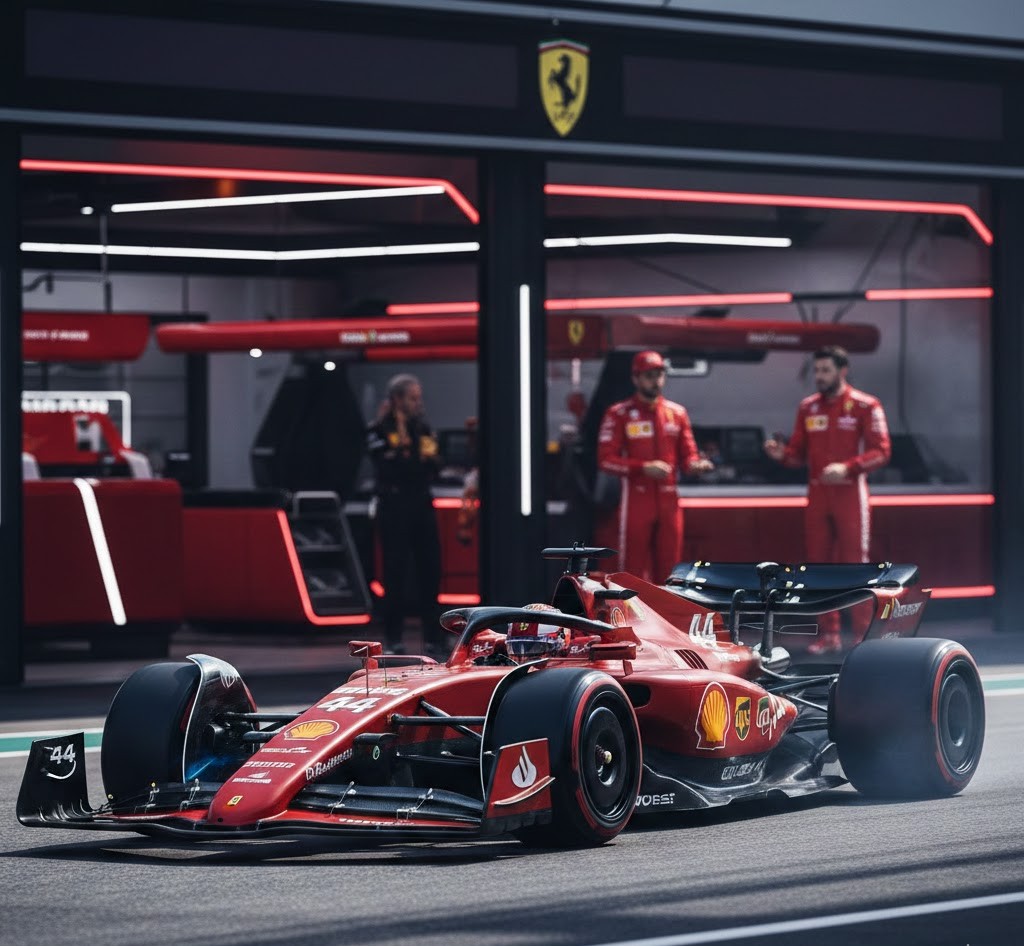
I’ve been watching the Rosso Corsa machines roll out of Maranello for years, but there is something electric about this one—literally! The Ferrari SF-26 has finally broken cover, and it isn’t just a facelift; it’s a radical departure from the ground-effect era we’ve known. “This car is the result of a great team effort and marks the beginning of a completely new journey,” says Team Principal Fred Vasseur, and he isn’t kidding! With the 2026 regulations slashing car weight by 30kg and shifting the power balance to a 50/50 split between petrol and electric, the Scuderia is betting big on a total architectural rethink to reclaim the throne.
Technical Specifications: The Power Unit 067/6 Heartbeat
The SF-26 introduces a simplified but more potent hybrid system that dictates the car’s entire design philosophy.
- MGU-K Power Surge: The removal of the complex MGU-H has allowed engineers to beef up the MGU-K to a massive 350 kW, tripling the previous electrical output.
- Sustainable Fuel Integration: The 1.6-liter V6 now runs on 100% advanced sustainable fuels, developed in partnership with Shell to maintain high thermal efficiency.
- Battery Management: A new lithium-ion battery pack, with a 9 MJ energy limit during charging, requires a completely different tactical approach from the drivers.
Active Aerodynamics: Beyond the Drag Reduction System
Ferrari has ditched the traditional DRS-only mindset for a switchable “Corner” and “Straight” mode system.
- Movable Wings: The SF-26 features active aero on both the front and rear wings, which function like Venetian blinds to balance downforce and drag in real-time.
- Manual Override Mode: Drivers now have a “Boost” button for extra electrical energy when within a second of a rival, creating a “cat and mouse” energy game.
- Simplified Geometry: To reduce “out-washing” and allow for closer racing, the front wing is significantly simpler with fewer elements than the SF-25.
Chassis and Suspension: A Push-Rod Revolution
Handling has been overhauled to accommodate the shorter, narrower 2026 dimensions.
- Suspension Shift: Loïc Serra has moved the SF-26 to a push-rod configuration at both the front and rear, optimizing the mechanical platform for the new 18-inch Pirelli tires.
- Weight Reduction: The car hits the scales at the new 770 kg minimum weight, achieved through a carbon fiber composite honeycomb chassis and lighter bodywork.
- Agility Focus: With a wheelbase reduced by 200mm, the SF-26 is designed to be much more “pointy” and responsive in low-speed technical sectors.
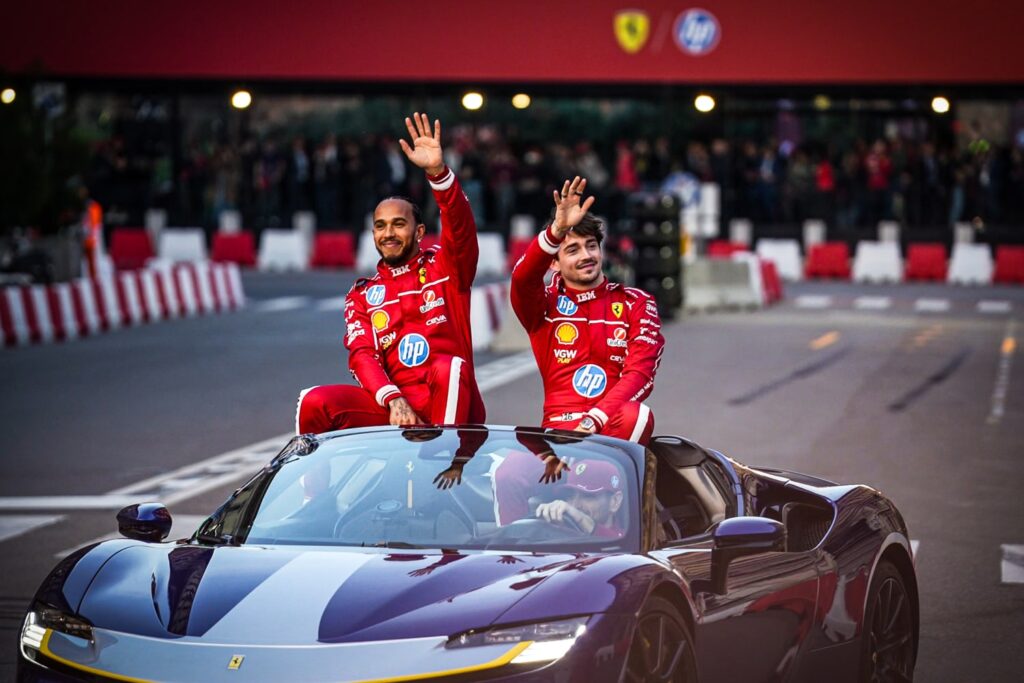
Driver Synergy: Hamilton and Leclerc’s Fingerprints
Unlike previous years, both Charles Leclerc and Lewis Hamilton have been embedded in the simulator for months to shape this car.
- Hamilton’s DNA: Lewis has publicly stated he feels “more connected” to the SF-26, having spent 10 months developing the simulator platform to suit his late-braking style.
- Driver Adaptability: Charles Leclerc has highlighted that the 2026 rules demand a “higher level of preparation” due to the intense energy management required over a race lap.
- Livery and Identity: The return to gloss paint (Rosso Scuderia) and increased white accents symbolizes a bridge between Ferrari’s storied past and its high-tech future.
Conclusion: Will the SF-26 End the Drought?
The SF-26 is more than just a new car; it’s a statement of intent from a team that hasn’t seen a Drivers’ Champion since 2007. By integrating the power unit and chassis more tightly than ever before, Maranello has given Hamilton and Leclerc a weapon that is lighter, smarter, and arguably more “fun” to drive. The path to the 2026 title will be paved with software updates and energy recovery strategies, and the Scuderia looks ready for the fight. Are you ready to see the red cars back on top? Leave a comment with your predictions for the Australian GP!